Looking to discover American pop music through the 1900’s? That’s what the Museum of Making Music promises to help you do, located in sunny Carlsbad, California, near San Diego. I went there in late August 2008, and this raised for me some interesting questions on how to communicate information in a museum setting.
(Alright, I know that there’s more time going back to summer 2008 than there is time until summer 2009, but I took notes.)
I’ll describe what I saw first, and then I’ll close with my own reflections.
- - - - -
As we moved past the greeter, who was incredibly friendly and gave an overview of the exhibits, I found myself in the 1900’s area. They had audio samples, including the John Philip Sousa Band and music from dance halls. This was great, and naturally, expected, for a museum of music, and they were scattered about in all the different sections.
There was actually a fairly cohesive narrative throughout the entire museum. Each section moved decade to decade, and there were instruments, information panels, as well as sound samples.
The greeter had failed to mention the special exhibits advertised on the website on violins and guitars (separately), but they were in there. The violins were separate from the main narrative, but what I think was the special guitar exhibit was integrated pretty seamlessly.
I think all of this was fine, with sound, visuals, and text information. Certainly, I got my money’s worth. But that was it, the museum just seemed “fine.”
- - - - -
The first thing I noticed was that in the 1900’s the audio samples conflicted with the sound samples of instruments just twenty feet away. It was distracting when listening to some of the ballads, especially since one of the instrument sounds was a tuba playing a really active bass line. As I moved through the museum, I found that there were several audio samples that didn’t play at all—including the ones for an entire section on early jazz music.Visually, the arrangements were confusing. In the early decades, from the 1900’s-1920’s, they would put violins with trumpets with banjos in the same case without any real explanation. I suppose for the non-musician, there wouldn’t be much of a distinction, but that’s part of the problem: there is a distinction between violins, trumpets, and banjos. They sound different, and are used in very different musical settings.
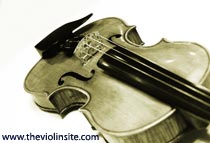
Some exhibits were a bit tedious. There were maybe 40 violins on display of different styles in their featured exhibit. A video panel was on the side, visually showing the differences in violins. I thought the video was okay, but it seemed like the expectation was then to take the new knowledge and explore the violins in the case. That seemed like a bit much, even for a musician (who doesn’t play the violin, however). I really only wanted to hear any differences between the makes
Lastly, visitor participation was strange. While I took my time in all of the areas, absorbing the information that was available, families with children would just rush through. The children would push the buttons without waiting for the audio track to finish, and the parents, naturally, would follow along. The children were given a worksheet to complete, and even their parents would just ask “Did you find the answer yet?”
- - - - -
Where does all this leave us? I had some thoughts on museums in general.
Narrative. I appreciated the narrative that the museum weaved for us, and while there doesn’t have to be a straight narrative in every museum, there should be some sort of organizing structure. There was one path through this museum with clearly labeled sections and recurring themes in the information panels. That allows us to digest the information in reasonable chunks and even trace different themes across the sections. This is true for every sort of communication, but I hadn’t realized it was also true of museums.Participation. While I got to choose which audio samples I listened to or not, there didn’t seem to be too much activity on my part. In the end, I almost felt as if I had to wade through the information, as if trying to finish a long article. There was too much to read (although maybe that is to be expected), and not enough to pull me from reading to reading. I didn’t have in my head too many guiding questions. Instead of actively searching for information, it was passive skimming. There weren’t any guiding themes explicitly proposed by the museum either. I only caught on after three or four decades. (Perhaps I am slow…)
Balance of medium. Since this was a museum about music, that should have been the main focus. Instead, there was way more visual information than audio information, including way too many displays of instruments without audio samples. And in general, a museum should have as its medium the focus on the subject matter, not just displays or expository material. I can go to the internet for those.
Information elsewhere. I could have found images of a variety of instruments put together, just by looking up "musical instruments." I could have enjoyed the violin video on youtube without having a case of 40 violins waiting for me. I wanted the museum to give me something that I can't find elsewhere. This means more than providing information, but combining selected bits with engaging activities.
- - - - -
These are just some starting points for me to think about museums in a structured way. I’ve skipped over a few aspects like location and advertising because at this point, they seemed less instructive.
Overall assessment of this museum: Lots of information is nice, but not enough to make a museum. The content must be filtered until it creates a graspable experience by the visitor. In other words, “just show me the good stuff, and I’ll look up the rest later.”

